Discover
Expert Back Pain & Sciatica Treatment in Birmingham
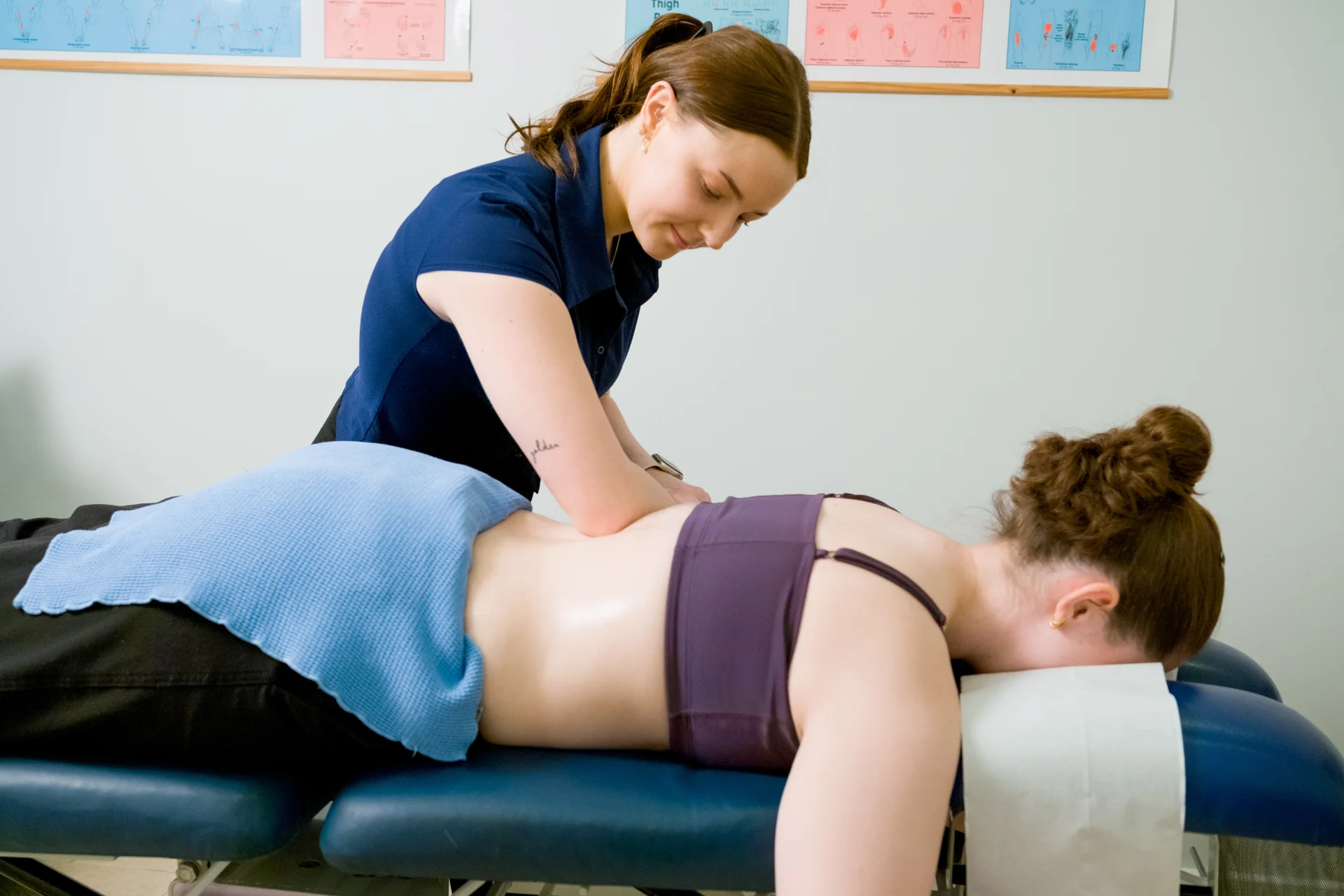
Back pain is the single most common reason people visit a chiropractor — and for good reason. It is also one of the conditions where chiropractic care has its strongest clinical evidence base, with spinal manipulation recommended in NICE guidelines as a first-line treatment for low back pain.
Whether you have woken up unable to move, are struggling with pain that has built gradually over months or years, or are dealing with the shooting leg pain of sciatica — the team at Harborne Chiropractic Clinic will assess the root cause of your problem and build a treatment plan around it. Not around a generic protocol. Around you.
Understanding Back Pain
Back pain is rarely caused by a single dramatic event — although it often feels that way. Most acute episodes are the result of cumulative strain: small, repetitive mechanical stresses that build over time until the point where something relatively minor — bending to pick up a bag, sneezing, reaching for something — tips the body into a painful episode. This is why people are often baffled by what triggered their back pain. It wasn’t the thing that happened last Tuesday. It was years of load accumulating to that point.
When the injury occurs, the nervous system responds by putting the surrounding muscles into protective spasm — acting as a natural splint around the injured area. This spasm reduces mobility, amplifies pain and, if not properly addressed, can persist long after the underlying injury has healed. This is why back pain treated only with rest and painkillers so frequently returns — the mechanical cause and the compensatory patterns around it remain unresolved.
Discover
Types of Back Pain We Treat
Acute Low Back Pain
Sudden onset pain in the lower back — often severe, frequently with associated muscle spasm and restricted movement. Acute episodes can be deeply debilitating but typically respond well and quickly to chiropractic treatment. Early intervention produces significantly better outcomes than rest alone, and reduces the risk of the episode becoming chronic.
Chronic Low Back Pain
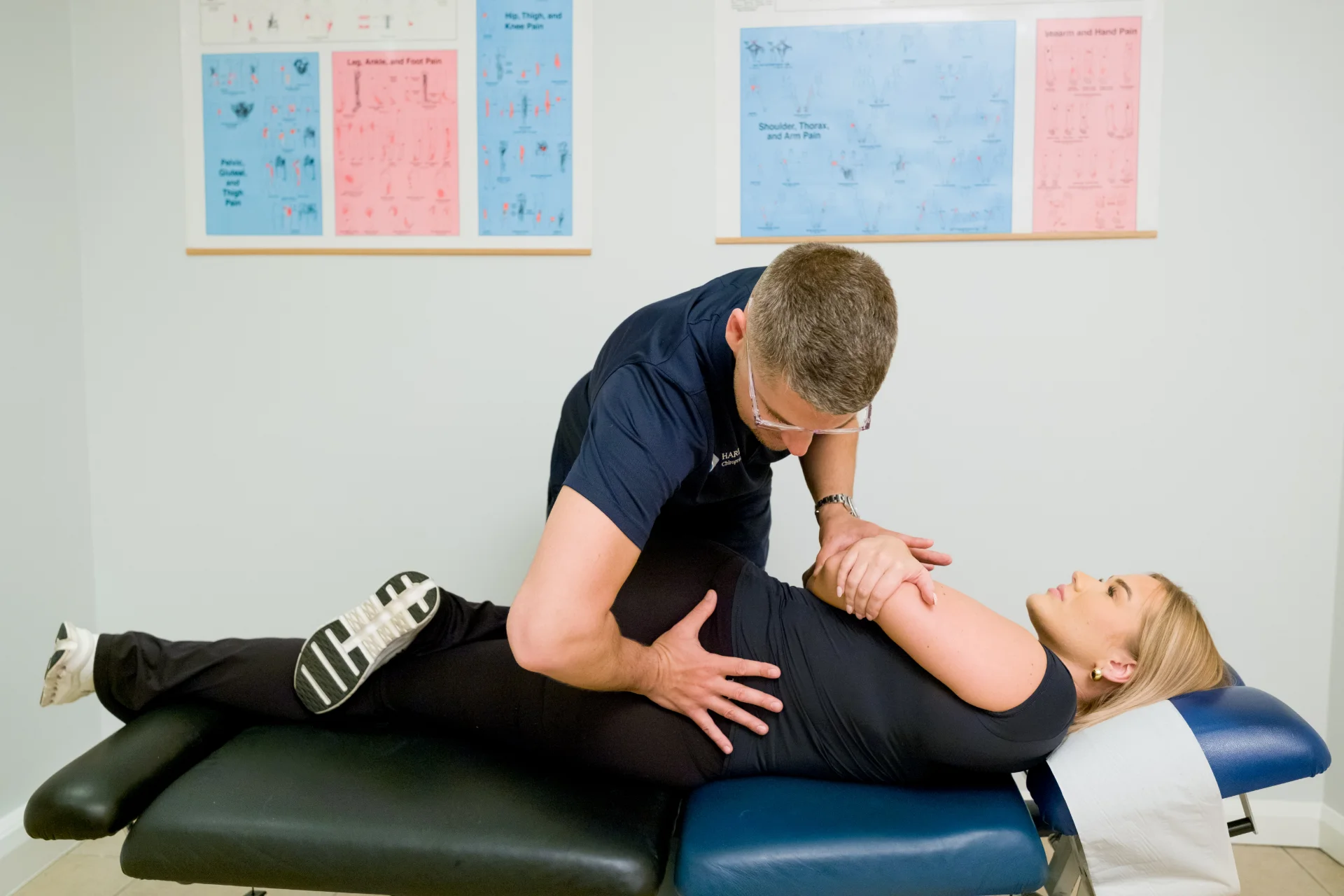
Pain that has persisted for twelve weeks or more — often characterised by periods of relative improvement punctuated by acute flare-ups. Chronic back pain nearly always has an underlying mechanical contributor that has not been addressed. Our approach focuses on identifying and treating this root cause, combined with rehabilitation to build the strength and resilience that prevents recurrence.
Disc-Related Back Pain
The intervertebral discs act as shock absorbers between the vertebrae of the spine. When a disc bulges or herniates — either through injury or degenerative change — it can compress nearby nerve roots, producing pain both locally in the back and radiating into the buttock and leg. Disc-related conditions are among the most common causes of both back pain and sciatica.
The vast majority of disc bulges and herniations respond well to conservative treatment and do not require surgery. Chiropractic care — particularly when combined with physiotherapy rehabilitation — is highly effective in managing disc-related back pain and can significantly accelerate natural recovery.
Postural and Occupational Back Pain
Back pain driven by sustained postures, sedentary work and repetitive occupational demands. Increasingly common and consistently underestimated — particularly in desk workers who spend eight or more hours a day in positions that load the spine unevenly. Our assessment includes evaluation of your working environment and posture, alongside hands-on treatment.
Facet Joint Pain
The facet joints are small paired joints at the back of each vertebra that guide and stabilise spinal movement. Irritation or degeneration of these joints is a common source of back pain — typically felt as a localised ache that worsens with extension (leaning back) and prolonged standing. Facet joint pain responds particularly well to chiropractic manipulation and mobilisation.
Mid and Upper Back Pain
Pain in the thoracic spine — between the shoulder blades and across the mid back — is often postural in origin but can also result from rib joint dysfunction, muscle strain and referred pain from the neck. Often dismissed as less serious than lower back pain, thoracic pain can be significantly limiting and responds well to targeted treatment.

Discover
Understanding Sciatica
Sciatica is not a diagnosis in itself — it is a description of symptoms caused by compression or irritation of the sciatic nerve, which runs from the lower spine through the buttock and down the back of each leg to the foot. It is one of the most recognisable — and one of the most debilitating — presentations we see.
What sciatica feels like
Sciatica typically produces pain that radiates from the lower back or buttock into the thigh, calf and sometimes the foot — often described as sharp, burning, shooting or electric in character. It may be accompanied by numbness, tingling or weakness in the leg. In some patients the leg symptoms are more prominent than the back pain itself.
What causes sciatica
The most common causes are a lumbar disc bulge or herniation compressing a nerve root, and piriformis syndrome — where the piriformis muscle in the buttock irritates the sciatic nerve as it passes through or beneath it. Less commonly, sciatica is caused by degenerative changes in the lumbar spine narrowing the spaces through which nerve roots exit. Accurate diagnosis of the underlying cause is essential — because the treatment approach differs significantly depending on what is actually happening.
How we treat sciatica
Our chiropractors are experienced in the assessment and treatment of sciatica. Following a thorough clinical examination — including neurological testing and orthopaedic assessment to identify the source and level of nerve involvement — we build a treatment plan that may include spinal manipulation, mobilisation, soft tissue therapy, nerve mobilisation techniques and a progressive rehabilitation programme. The goal is not just pain relief but genuine resolution of the underlying mechanical cause.
Where symptoms are severe, persistent or accompanied by significant neurological deficit — particularly weakness or bladder and bowel dysfunction — we will refer you promptly for appropriate medical investigation.
Discover
Our Approach to Treatment
At Harborne, back pain and sciatica are treated within a genuinely multi-disciplinary framework. Our chiropractors lead the assessment and spinal treatment, working alongside physiotherapists and sports massage therapists where the clinical picture benefits from a combined approach.
Treatment typically includes a combination of:
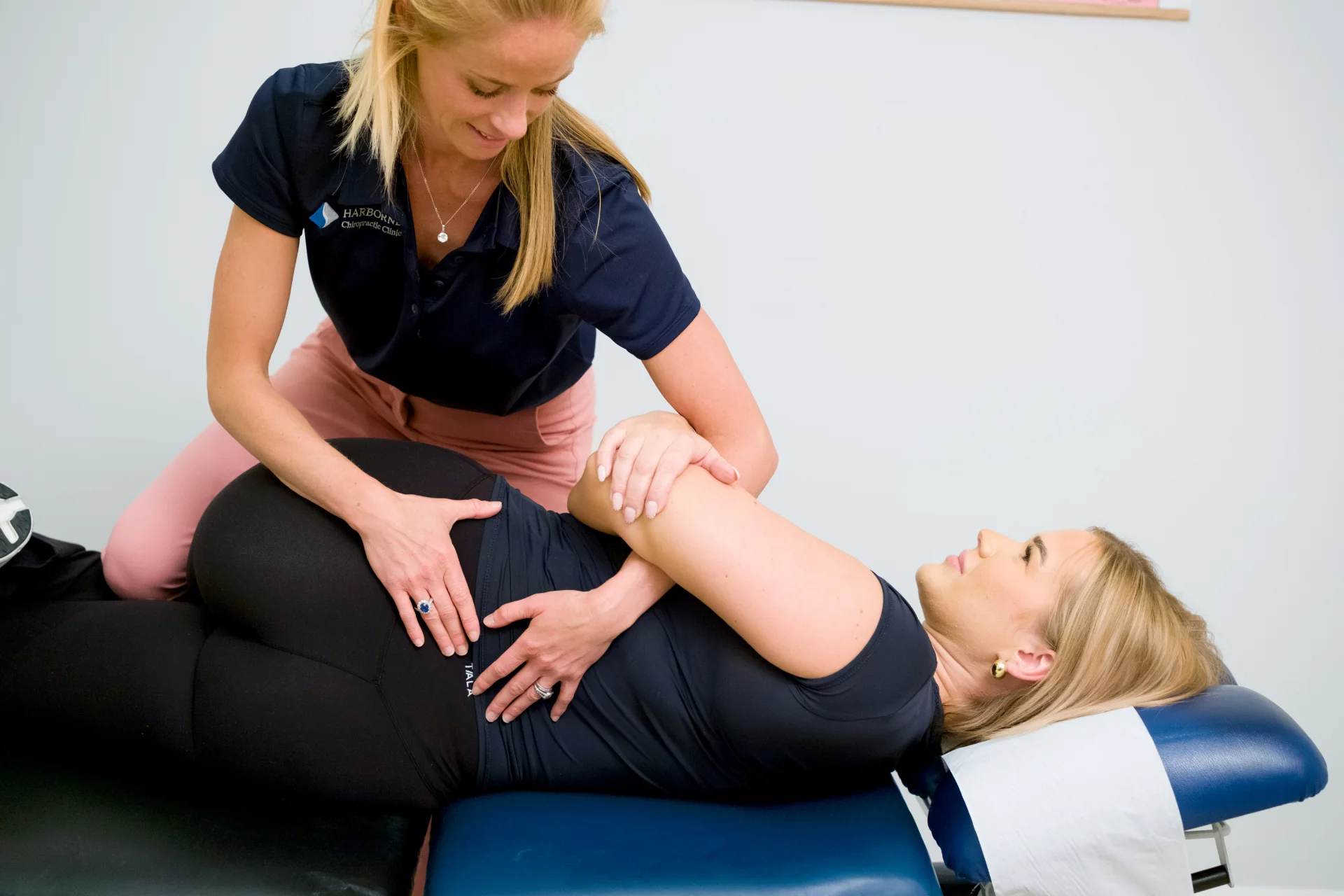
Spinal manipulation and mobilisation
To restore joint mobility, reduce pain and address mechanical dysfunction
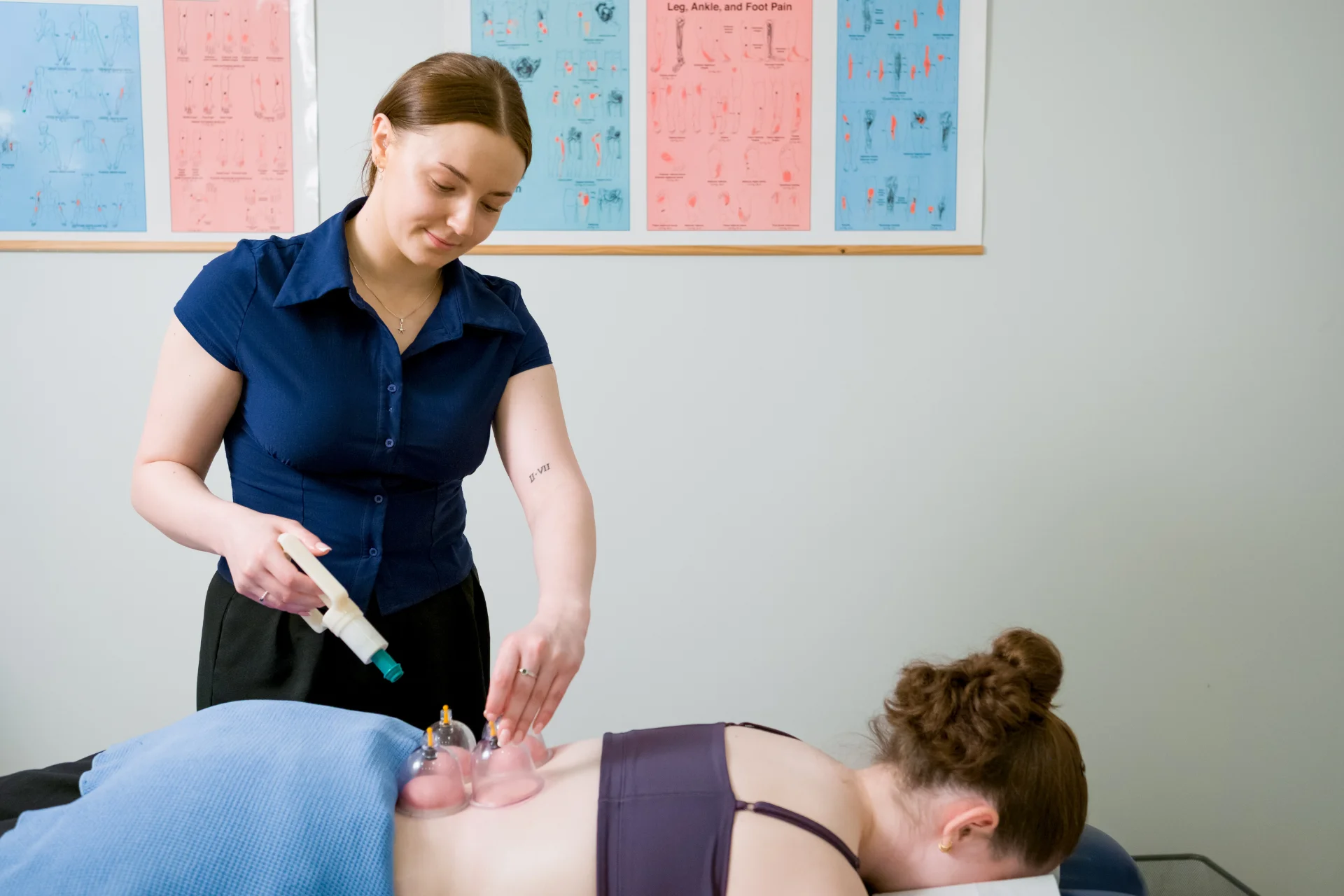
Soft tissue therapy
Targeting muscle spasm, trigger points and fascial restriction that perpetuate pain
Neural mobilisation
Specific techniques to reduce nerve sensitisation and improve nerve mobility
Rehabilitation exercise
Progressive programmes to rebuild core stability, spinal endurance and movement confidence
Postural correction and ergonomic advice
Addressing the lifestyle and occupational factors that contribute to recurrence
Shockwave therapy
Where chronic soft tissue or tendon involvement is present alongside spinal pain
We are honest about timelines and prognosis. At your initial assessment you will receive a clear diagnosis, a realistic treatment plan with defined goals and an honest view of what outcomes you can expect and over what period.
Discover
When to Seek Urgent Medical Attention
The vast majority of back pain and sciatica is mechanical in origin and safe to treat conservatively. However, certain presentations require urgent medical assessment. Please seek immediate attention if your back pain is accompanied by:
- Loss of bladder or bowel control, or difficulty passing urine — this may indicate cauda equina syndrome, a medical emergency
- Numbness or tingling in the inner thighs, genitals or buttocks (saddle anaesthesia)
- Significant, progressive weakness in both legs
- Back pain following significant trauma such as a fall or road traffic accident
- Back pain with unexplained fever, weight loss or in someone with a history of cancer
- Severe, constant pain that is unrelenting and not relieved by any position
We screen for all red flag presentations at your initial assessment. If anything in your history or examination raises concern, we will refer you immediately and appropriately.