
Discover
Expert Whiplash Treatment in Birmingham
If you have been involved in a road traffic accident, fall or sports collision and are experiencing neck pain, stiffness or headaches — even if symptoms did not appear immediately — you may have sustained a whiplash injury. Early, appropriate treatment makes a significant difference to how quickly and completely you recover.
At Harborne Chiropractic Clinic, our chiropractors are experienced in the assessment and treatment of whiplash-associated disorder. We provide thorough clinical assessment, clear diagnosis and a structured, evidence-based treatment plan — whether you are in the acute phase days after an incident, or dealing with symptoms that have persisted for months.
What Is Whiplash?
Whiplash is an injury to the soft tissues of the neck caused by a sudden, forceful acceleration-deceleration movement — most commonly in a rear-end road traffic collision, but also from falls, sports impacts and other traumatic events. The rapid, uncontrolled movement forces the cervical spine beyond its normal range, injuring the muscles, ligaments, joints and discs of the neck.
Whiplash is formally classified as Whiplash-Associated Disorder (WAD), graded from 0 to 4 based on severity. The majority of cases presenting to our clinic fall in the Grade 1 to 3 range — from mild soft tissue symptoms through to neck pain with neurological signs — all of which are appropriate for conservative chiropractic treatment.
Discover
Symptoms of Whiplash
Whiplash symptoms do not always appear immediately. It is common for pain and stiffness to develop or worsen in the 24 to 72 hours following an incident — sometimes leading people to assume they are uninjured at the time. Symptoms typically include:
- Neck pain and stiffness — often severe, with significantly restricted range of movement
- Headaches — typically originating at the base of the skull
- Shoulder and upper back pain
- Pain, numbness or tingling radiating into the arms and hands — indicating nerve involvement
- Jaw pain and difficulty chewing (temporomandibular joint involvement)
- Dizziness and balance disturbance
- Visual disturbances
- Fatigue, difficulty concentrating and sleep disturbance
- Psychological symptoms including anxiety, particularly following traumatic accidents
If you are experiencing arm symptoms, significant dizziness, difficulty swallowing or neurological changes following a neck injury, seek medical assessment promptly. We will screen for these presentations at your initial consultation and refer you for imaging or specialist assessment if indicated.

Discover
Why Early Treatment Matters
The advice to simply rest after a whiplash injury is outdated and counterproductive. Current clinical evidence strongly supports early active treatment — gentle mobilisation, hands-on therapy and guided movement — as the approach most likely to produce full recovery.
When whiplash is left untreated or managed only with rest and pain medication, several things can happen. Injured joints and muscles heal in a shortened, restricted state. Compensatory movement patterns develop as the body protects the painful area. The nervous system can become sensitised — a process called central sensitisation — in which pain signals amplify and persist well beyond the original tissue injury. Once these patterns are established, recovery becomes significantly more complex and prolonged.
Early intervention — ideally within the first few weeks of injury — reduces the risk of chronicity, supports natural tissue healing and helps prevent the compensatory patterns that drive long-term pain. If your injury was recent, don’t wait to see if it resolves on its own.

Discover
How We Treat Whiplash at Harborne
Treatment begins with a thorough clinical assessment — covering the mechanism and severity of the injury, your current symptoms, any neurological signs and your general health. Where appropriate, we will recommend imaging to rule out fracture or instability before commencing manual treatment.
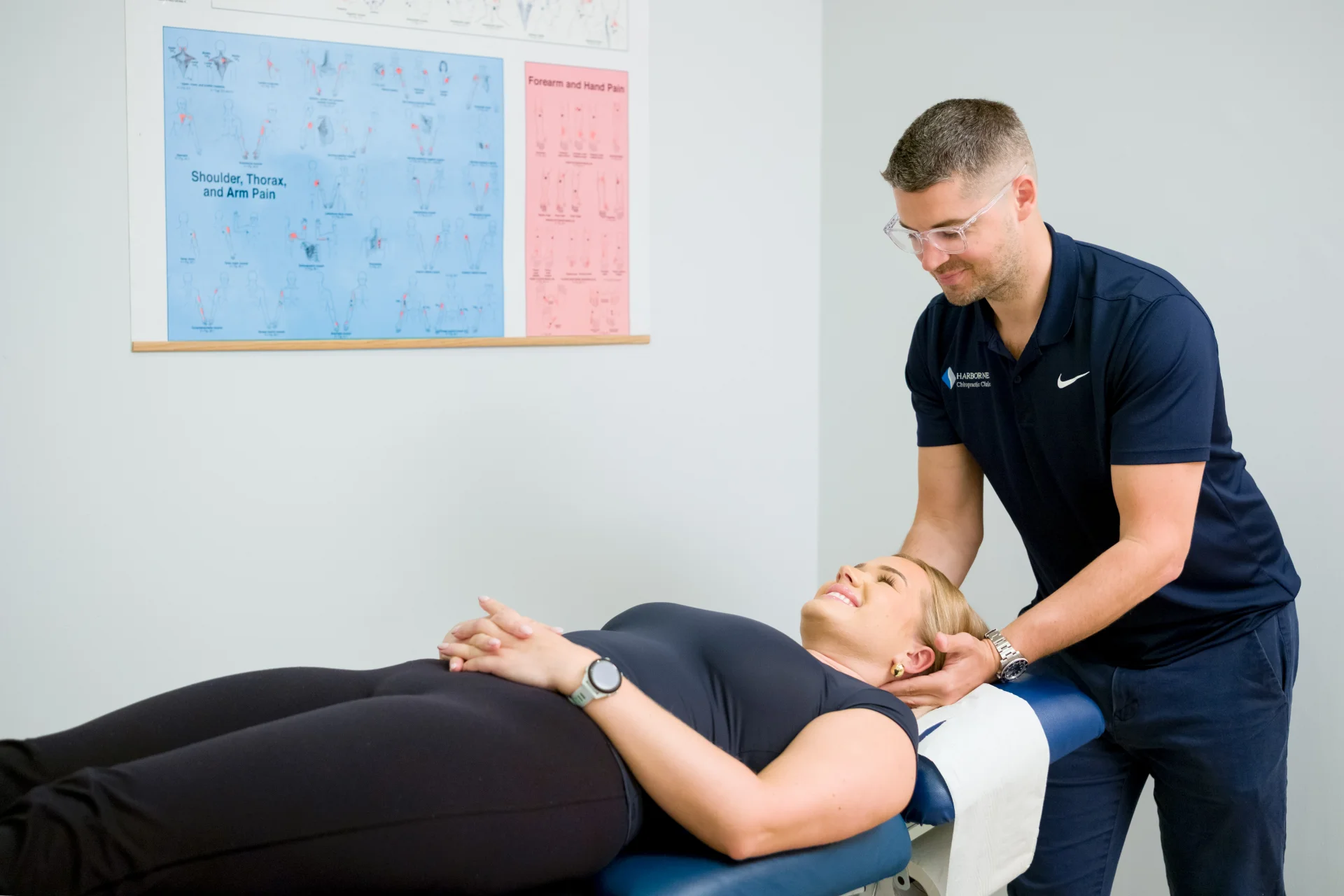
Treatment is staged and progressive, adapting to your recovery as it unfolds. In the acute phase, treatment focuses on pain relief, reducing muscle spasm and restoring gentle mobility. As recovery progresses, the focus shifts to restoring full range of movement, addressing any remaining joint restriction and rebuilding the strength and neuromuscular control that protect against recurrence. Treatment may include:
- Gentle cervical and thoracic mobilisation and manipulation — adapted to your stage of recovery and symptom severity
- Soft tissue therapy — targeting the deep and superficial muscles of the neck, shoulders and upper back
- Neural mobilisation — where nerve root irritation or arm symptoms are present
- Rehabilitation exercise — progressive programmes to restore deep neck muscle strength and cervical stability
- Postural correction — addressing the compensatory patterns that develop after whiplash
- Advice on activity, pacing and self-management throughout recovery
- Collaboration with your GP, insurer or solicitor where documentation is required

Discover
Treating Chronic Whiplash
Not everyone who comes to us with whiplash is in the acute phase. Many patients arrive months or years after an accident, still dealing with persistent neck pain, headaches and restricted movement that has never properly resolved. Chronic whiplash-associated disorder is a recognised clinical condition — and it is treatable.
Chronic whiplash requires a more complex clinical approach than acute injury — addressing not just the original tissue damage but the central sensitisation, muscle deconditioning and movement avoidance patterns that have developed over time. Our multi-disciplinary team is well placed to manage this, combining chiropractic, physiotherapy and sports massage within a coordinated treatment plan.

Discover
Insurance and Medico-Legal Reporting
If your whiplash injury resulted from a road traffic accident that was not your fault, your treatment costs may be recoverable through a personal injury claim. We are experienced in providing the clinical documentation and reports that solicitors and insurers require, and can work alongside your legal team throughout your treatment.
We also accept patients referred through private health insurance, including BUPA, AXA Health and Aviva, where policies cover chiropractic treatment. Contact your insurer to confirm your cover before booking.