
Discover
Shockwave Therapy in Birmingham
You’ve tried rest. You’ve tried physiotherapy, massage, possibly injections. The pain keeps coming back — months in, sometimes years in. Shockwave therapy exists precisely for this situation.
At Harborne Chiropractic Clinic, we offer shockwave therapy as part of our multi-disciplinary approach to musculoskeletal care. It is one of the most clinically effective non-surgical treatments available for chronic tendon and soft tissue conditions — and for the right patient, it can achieve results that other treatments simply cannot.
What Is Shockwave Therapy?
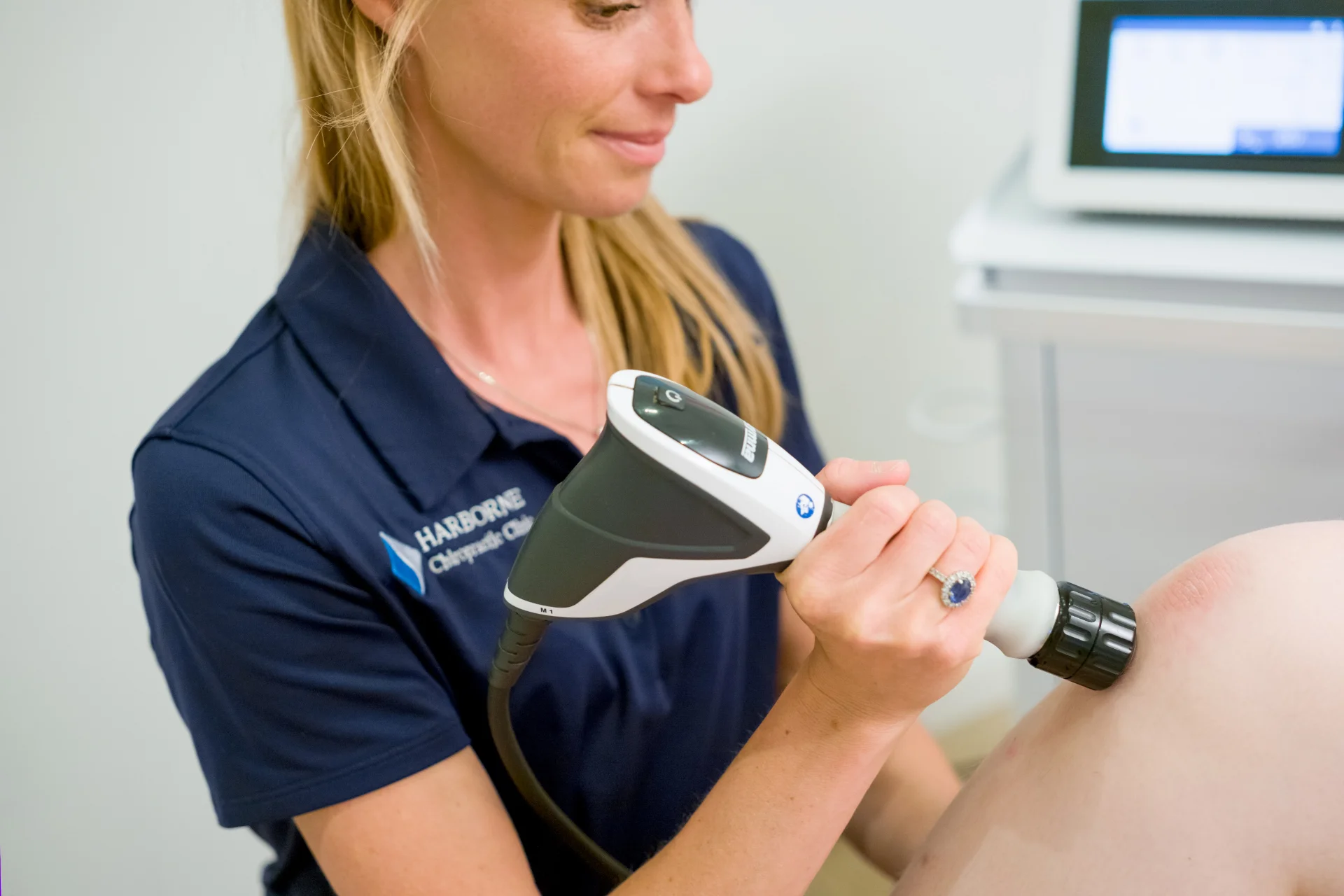
Shockwave therapy — formally known as Extracorporeal Shockwave Therapy (ESWT) — is a clinically proven, non-invasive treatment that delivers high-energy acoustic waves to damaged or degenerated tissue via a handheld probe applied to the skin.
These acoustic waves trigger a targeted biological response in the treated area: circulation increases, calcific deposits and scar tissue begin to break down, and the body’s own repair processes are reactivated in tissue that has otherwise become stuck in a chronic, non-healing state. It works at a cellular level — stimulating the production of collagen and new blood vessels, and restoring the conditions needed for genuine tissue regeneration.
This is why shockwave therapy is particularly effective for chronic conditions. In long-standing tendinopathies, the tissue has often degenerated rather than simply become inflamed — meaning anti-inflammatory approaches (including steroid injections) are of limited benefit. Shockwave addresses the degeneration itself, not just the symptoms sitting on top of it.
NICE (the National Institute for Health and Care Excellence) endorses shockwave therapy for a number of tendon conditions, and the clinical evidence base is substantial. It is one of the most evidence-backed non-surgical options available for these conditions.
Discover
Is Shockwave Therapy Right for You?
Shockwave therapy is specifically indicated for chronic soft tissue and tendon conditions — problems that have persisted for several weeks or months and have not responded adequately to other conservative treatments. It is not typically a first-line treatment; it is the intervention that makes the difference when standard approaches have plateaued.
It is equally suitable for competitive athletes and people who would never describe themselves as sporty. Many of our shockwave patients are professionals with desk jobs, manual workers or older adults with persistent tendon problems that are simply limiting their daily life.
You may be a good candidate for shockwave therapy if:
- Your tendon or soft tissue condition has persisted for 6 weeks or more
- Physiotherapy, rest and massage have provided only partial or temporary relief
- You have been told a steroid injection is your next option and want to explore alternatives first
- You want to avoid surgery or have been told surgery may be necessary
- You have a calcific condition such as calcific tendinitis of the shoulder
If you are unsure whether shockwave is appropriate for your condition, call us on 0121 448 6990. We assess every patient clinically before recommending it — and we will tell you honestly if we think a different treatment would serve you better.
Discover
Conditions Treated With Shockwave Therapy
Shockwave therapy is clinically indicated for a specific range of tendon and soft tissue conditions. At Harborne, we use it to treat:
Plantar Fasciitis
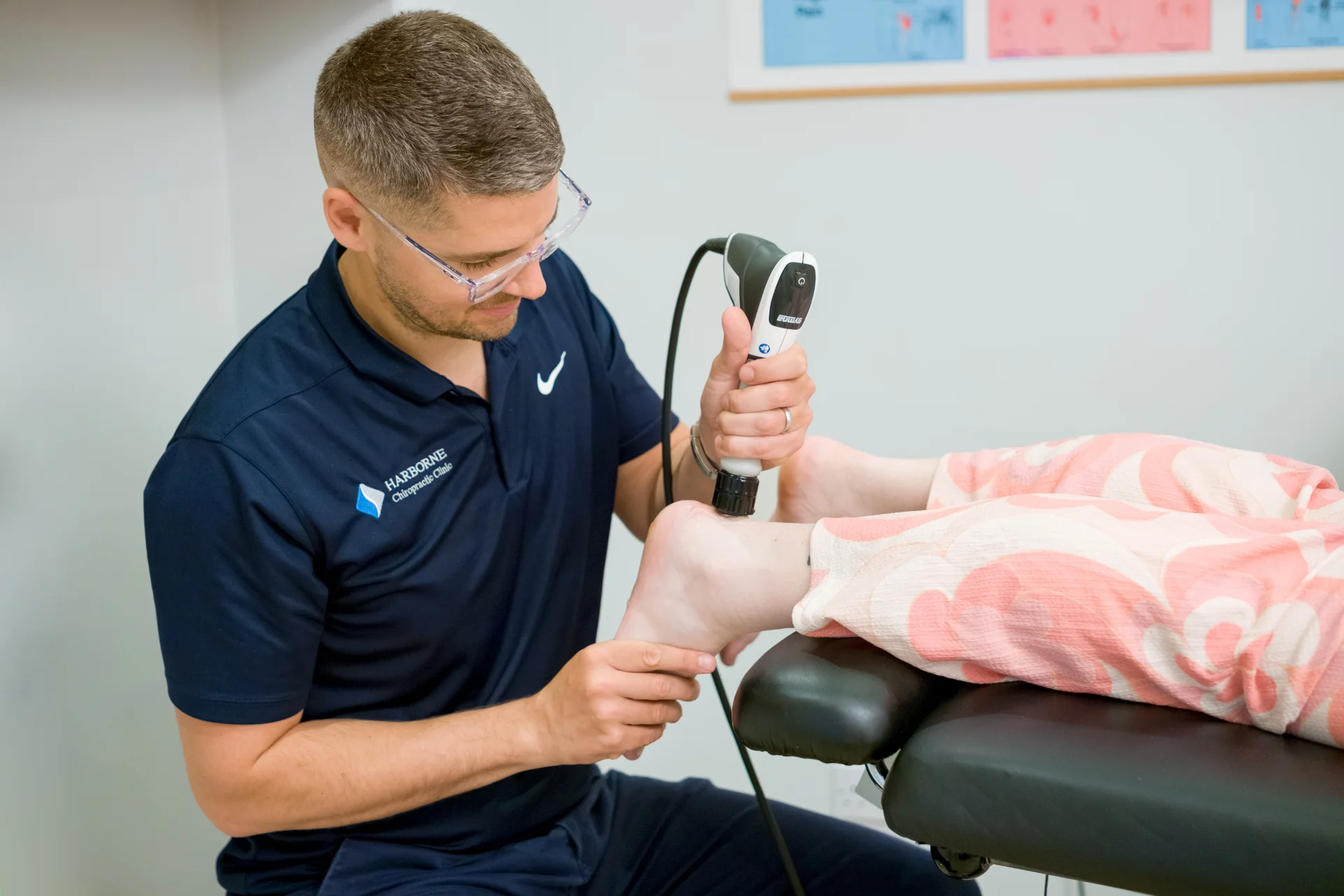
The most common cause of persistent heel pain — typically worst first thing in the morning or after a period of rest. Shockwave therapy has one of its strongest evidence bases here and consistently produces excellent outcomes, particularly in cases where physiotherapy and orthotics have provided only partial relief.
Achilles Tendinopathy
Chronic pain and stiffness in the Achilles tendon — a notoriously slow-healing structure. Shockwave stimulates blood flow and collagen synthesis in the degenerated tendon, achieving results that loading exercises alone often cannot.
Patellar Tendinopathy (Jumper's Knee)
Persistent pain at the base of the kneecap, common in athletes but not exclusive to them. Shockwave is a well-established treatment for patellar tendinopathy that has not resolved with physiotherapy rehabilitation.
Rotator Cuff Tendinopathy and Calcific Tendinitis
Shoulder pain arising from tendon degeneration or calcific deposits. Shockwave is particularly effective for calcific tendinitis — where calcium deposits in the tendon cause significant pain — breaking down the deposits and restoring normal tissue structure.
Greater Trochanteric Pain Syndrome (Hip Tendinopathy)
Pain on the outer hip and thigh, often described as a deep ache that is worse lying on the affected side or after prolonged sitting. A condition that responds well to shockwave where other interventions have failed to provide lasting relief.
Lateral Epicondylalgia (Tennis Elbow)
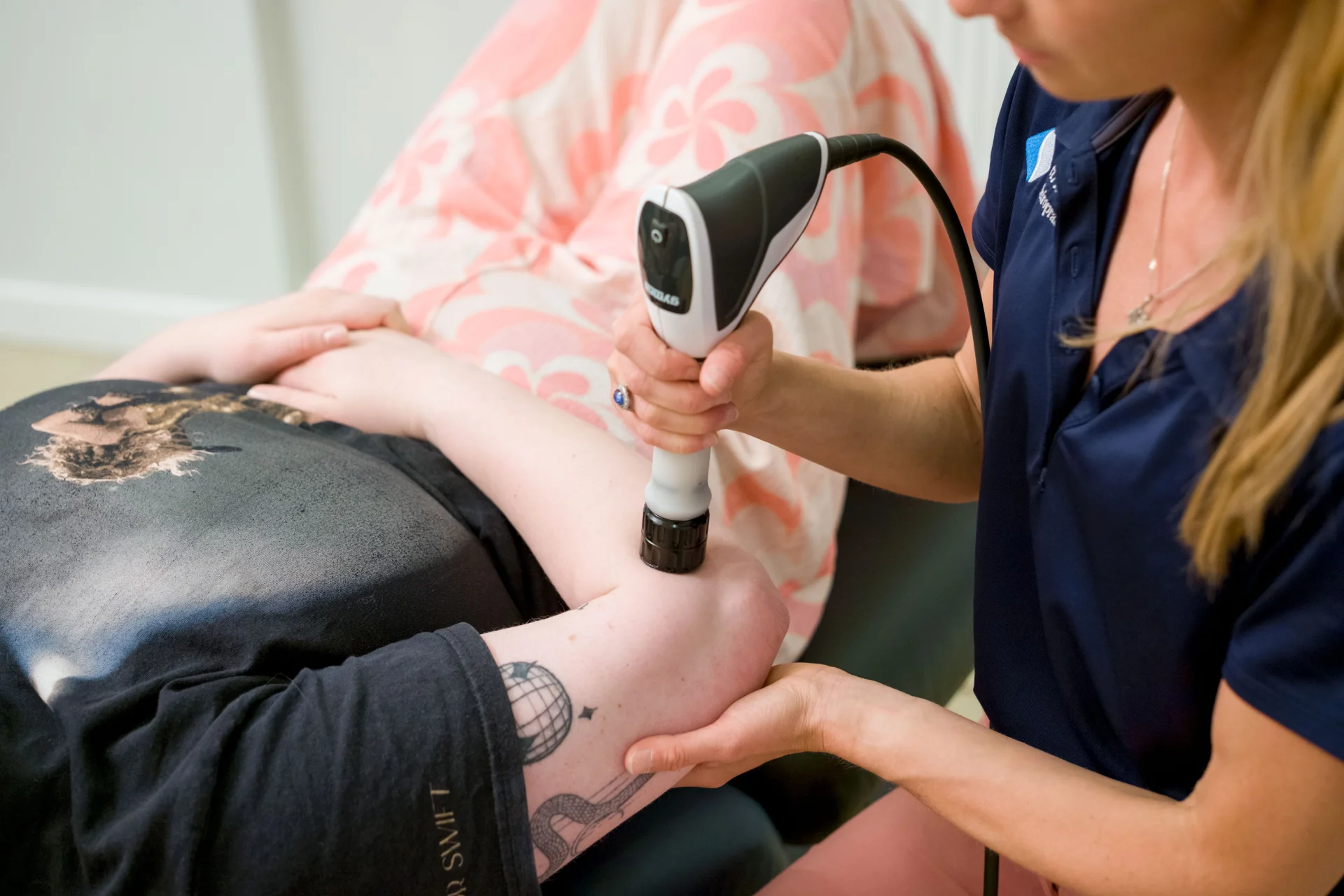
Persistent pain on the outer elbow that limits grip strength and daily activities. Shockwave is one of the most effective treatments for chronic tennis elbow that has not responded to rest, physio or steroid injection.
Hamstring Tendinopathy
Deep pain at the base of the buttock, often aggravated by sitting, running or loading. Proximal hamstring tendinopathy is a particularly stubborn condition — shockwave offers a targeted route to tissue repair when loading-based rehab alone is insufficient.
Chronic Myofascial Pain and Trigger Points
Deep, persistent muscle pain and trigger points that have not resolved with massage or manual therapy. Shockwave can penetrate beyond the reach of hands-on treatment, disrupting chronic myofascial restriction and reducing referred pain patterns.
Everything You Need to Know
What to Expect at Your First Appointment
Your initial consultation is a comprehensive clinical assessment, not a rushed 10-minute appointment. We take the time to understand your full history, identify the underlying cause of your problem and explain exactly what we find.
Initial Assessment
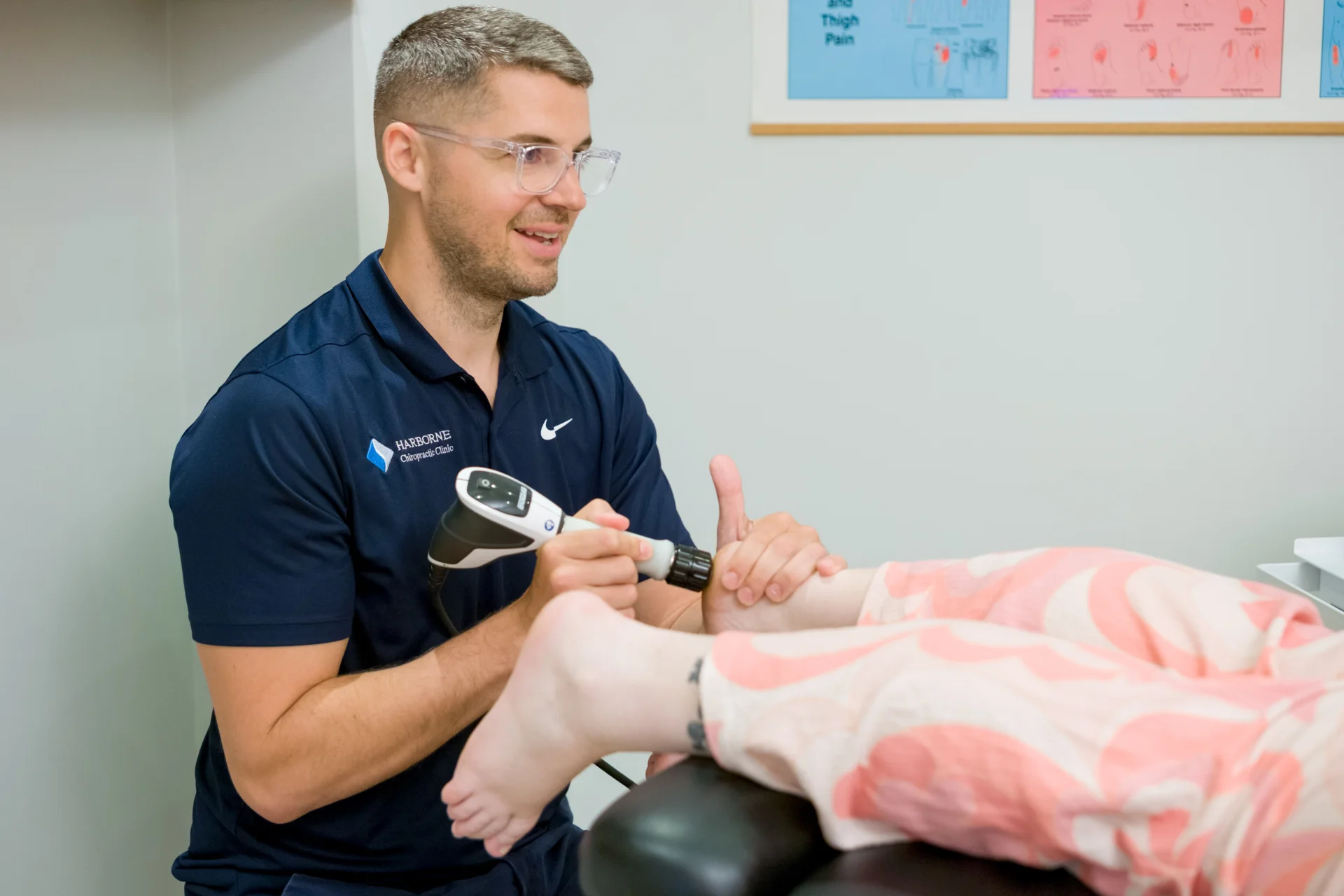
Before any shockwave treatment begins, we carry out a thorough clinical assessment to confirm the diagnosis, establish that shockwave is appropriate and rule out any contraindications. We will explain exactly what treatment involves and what outcomes are realistic for your specific condition.
Treatment Itself
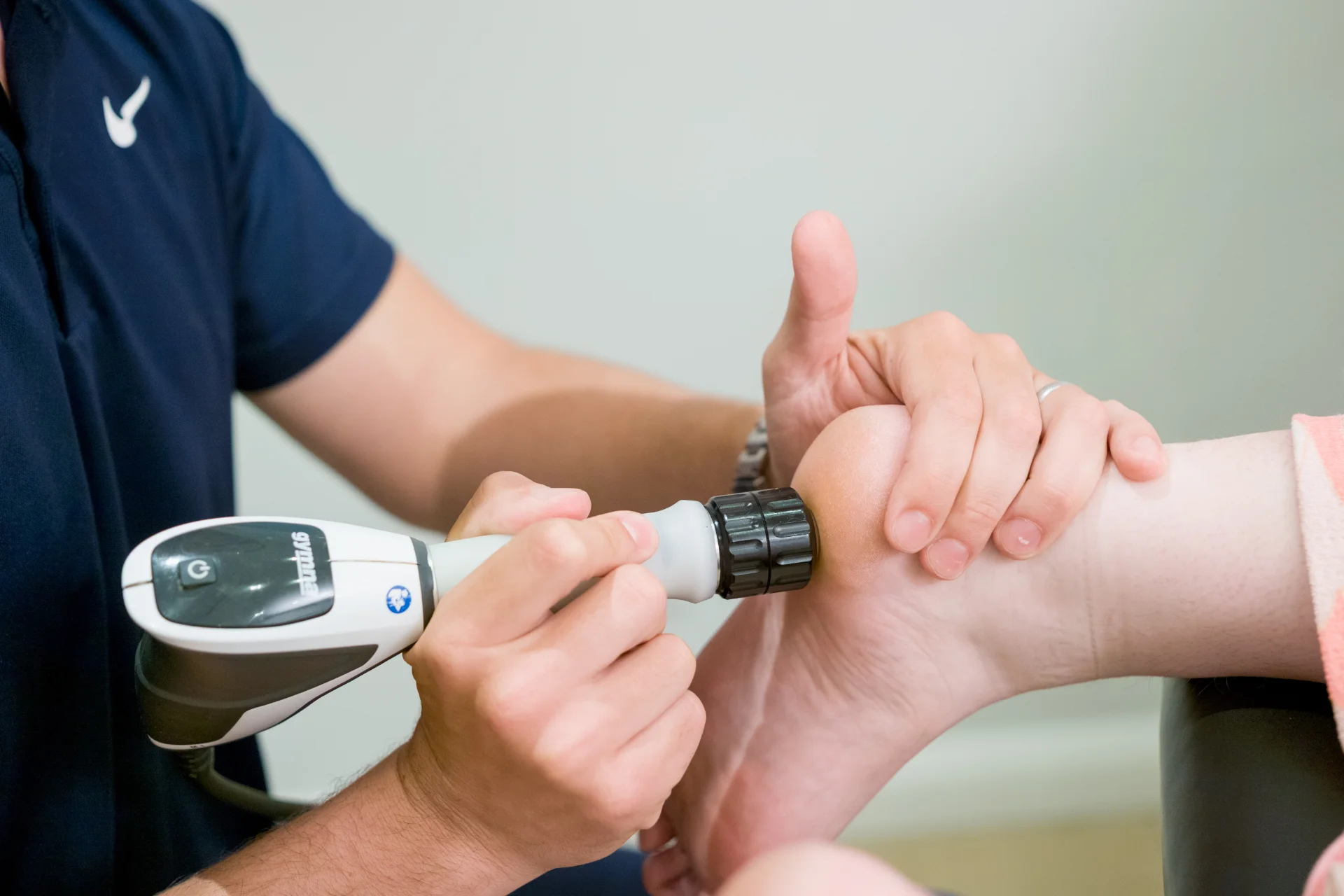
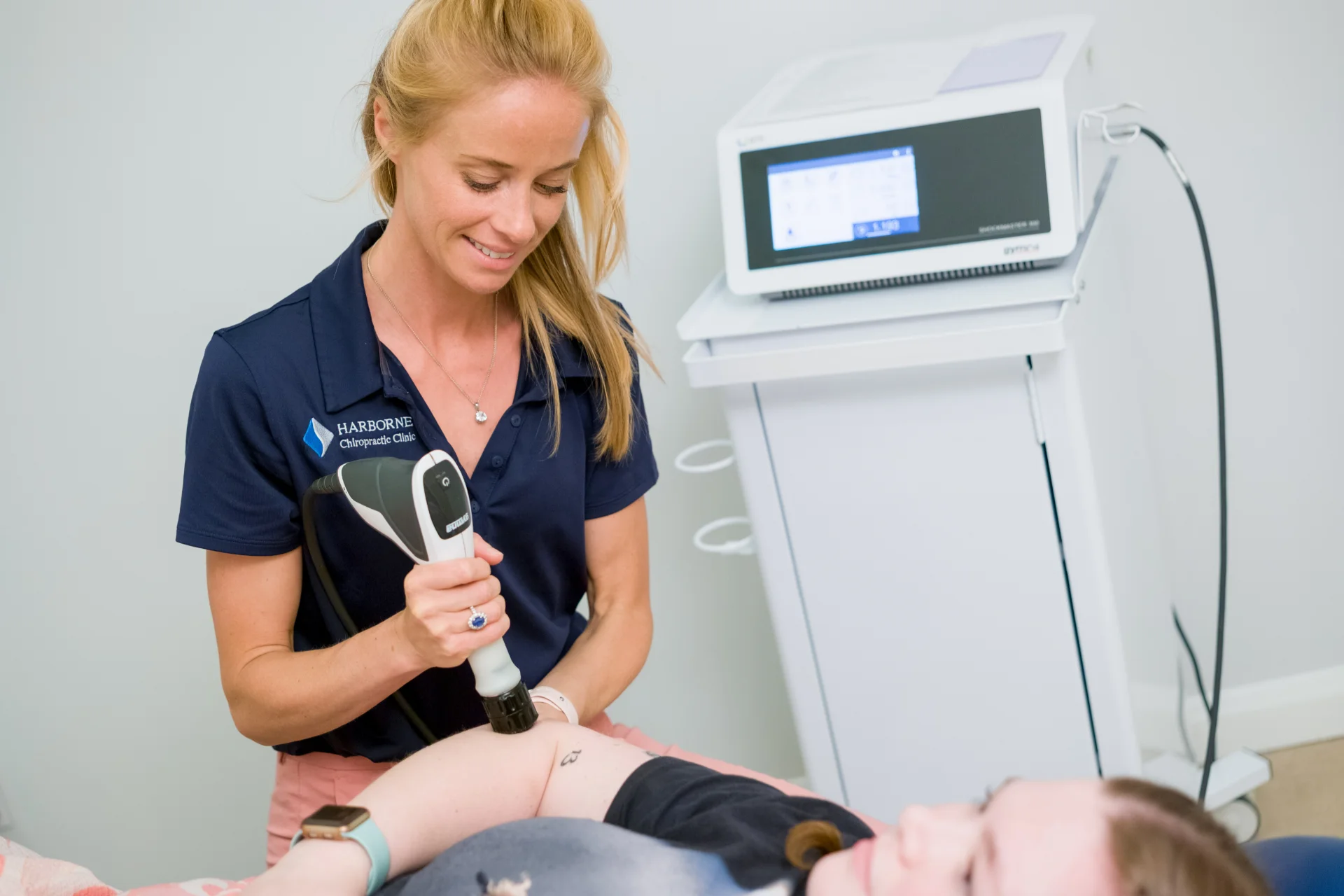
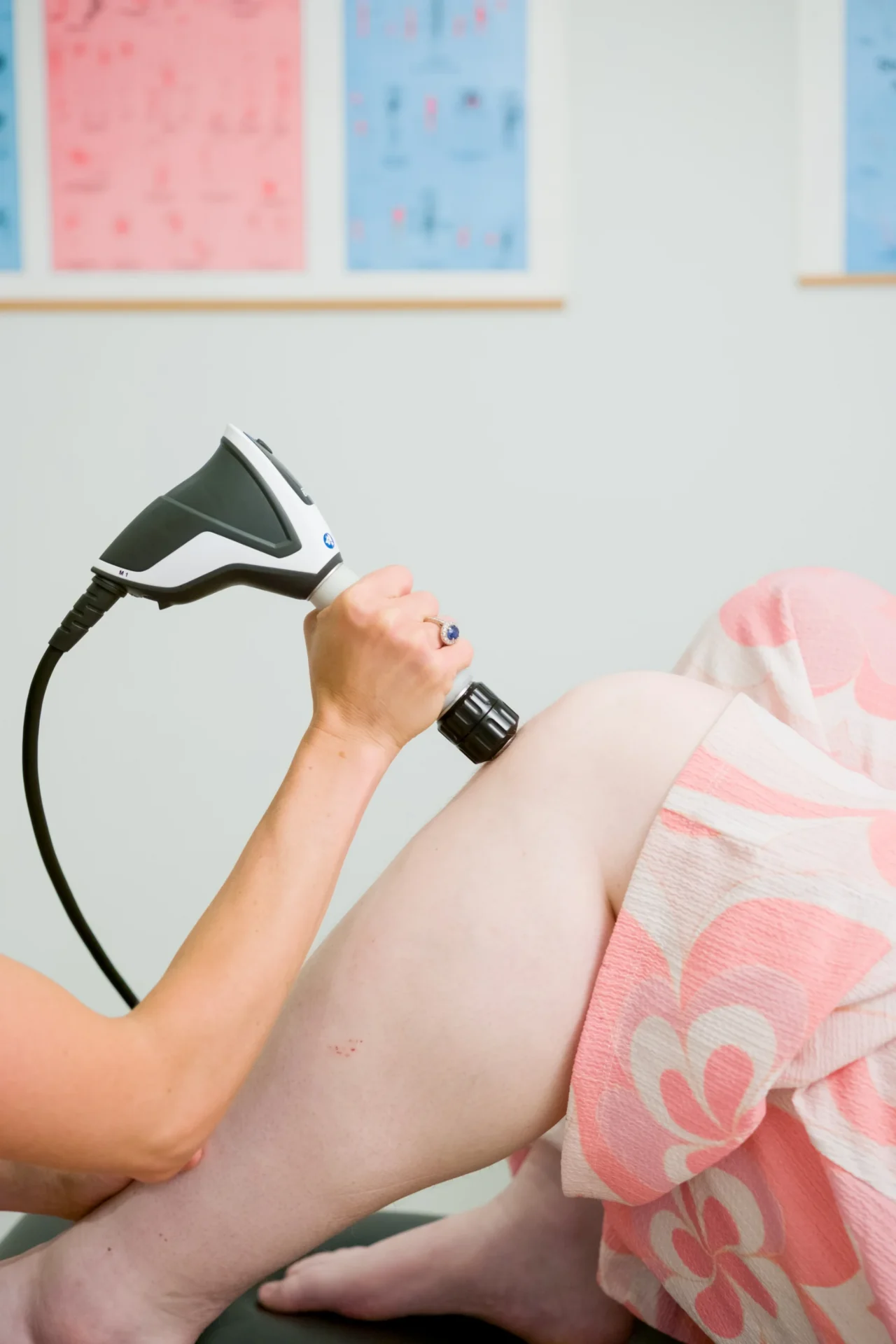
A gel is applied to the skin over the treatment area and the shockwave probe is placed against it. You will feel a series of rapid pulses — these can be uncomfortable, particularly directly over the affected tissue, but the sensation is well tolerated by most patients and the session typically lasts 15 to 20 minutes.
Sessions
Most patients require between three and six sessions, spaced approximately one week apart. Some patients notice an improvement after the first or second session; for others, the response becomes apparent in the weeks following the course of treatment as the tissue continues to remodel. We reassess after each session and adjust accordingly.
After Treatment
It is normal to experience some temporary soreness in the treated area for 24 to 48 hours after a session — this is a normal part of the biological response. We advise avoiding high-impact activity for this window and will give you specific guidance based on your condition and activity level. Anti-inflammatory medication is best avoided during a course of shockwave as it can blunt the therapeutic response.
Discover
Shockwave as Part of Integrated Treatment
Shockwave therapy produces its best results when combined with appropriate rehabilitation — typically progressive loading exercises that rebuild tendon strength and function as the tissue heals. At Harborne, our shockwave treatment sits within a clinical framework that includes physiotherapy, chiropractic and sports massage.
This means your shockwave treatment is not delivered in isolation. Where a rehabilitation programme would accelerate your recovery, our physiotherapy team can design and supervise it. Where chiropractic treatment would address a mechanical contributor to your condition, that conversation happens in the same building. You get a joined-up clinical plan — not a standalone procedure.
Reviews
The Standard of Care Trusted by Thousands
Posted on GoogleTrustindex verifies that the original source of the review is Google. Overall, a very positive first visit. Very simple to book an appointment and availability was so good I received an appointment on the day I needed it. Reception staff was pleasant and helpful. Luize - physiotherapist - was very professional and provided detailed explanation regarding the exploration she performed and the recommendation she provided. I feel confident in continuing under her care.Posted on GoogleTrustindex verifies that the original source of the review is Google. I couldn’t recommend Harborne Chiropractic Clinic highly enough! Everybody is so friendly and welcoming! Ifza is amazing, she has been helping me with my back/neck pain for weeks now and has made me feel comfortable from the very beginning. The receptionists are great too, every time I have attended I have been greeted with the warmest smile and welcome. I definitely recommend!⭐️Posted on GoogleTrustindex verifies that the original source of the review is Google. I visited the chiropractor clinic today and had a great experience with Guy. From the moment I arrived, he was very welcoming and professional. He took the time to listen carefully to the issues I’ve been having with my back and asked helpful questions to understand what might be causing the discomfort. Guy gave me really clear and honest advice about my posture, daily habits, and things I can do to help prevent the pain from coming back. I appreciated that he explained everything in a simple way so I could understand what was happening with my back and why certain adjustments were needed. During the treatment, he was very skilled and confident. He performed the adjustments carefully and made sure I was comfortable the whole time. The “cracks” were done professionally and I could immediately feel the tension in my back starting to release. By the time I left, my back felt noticeably better and much more relaxed. I’m really glad I went and would definitely recommend Guy to anyone looking for a knowledgeable and effective chiropractor. A genuinely great service and a very positive experience overallPosted on GoogleTrustindex verifies that the original source of the review is Google. I’ve had an amazing experience with Harborne Chiropractic. From the very first visit, the whole team made me feel completely at ease. They took the time to understand my concerns, explain everything clearly, and guide me through each step of the process. The reception staff are always warm, friendly, efficient, and incredibly helpful, and the location on Knightlow Road in Harborne is just brilliant—so easy to get to with plenty of parking. Every appointment has run smoothly, and each time I’ve come in with an issue, it’s been addressed carefully, with my recovery really progressing. As someone who’s been going to the gym for years, I really trust them with my care. Every visit is a positive, reassuring experience, and I know I can count on them whenever I need future treatment. I highly recommend them to anyone in the area!Posted on GoogleTrustindex verifies that the original source of the review is Google. Thank you for the amazing treatment. Your skill and attention really helped relieve my pain—I’m very grateful!”🫶Posted on GoogleTrustindex verifies that the original source of the review is Google. Very pleased all round with treatment , friendliness of staff & progress I’ve made with injury’s after three visits, with Teeg!Posted on GoogleTrustindex verifies that the original source of the review is Google. I can’t recommend Harborne Chiropractic Clinic highly enough! ⭐️ From the moment you walk in, the reception staff make you feel completely welcome and at ease. The whole team are incredibly friendly, professional, and genuinely care about helping you feel better. The clinic itself is spotless, calm, and very well run. A special mention has to go to Guy, who is absolutely brilliant at what he does. He takes the time to really listen, explain everything clearly, and make sure you feel comfortable throughout the treatment. His knowledge and expertise are obvious, and you can tell he genuinely wants the best outcome for his patients. I was in extreme pain when I started attending this clinic and left feeling amazing. Fantastic service, amazing staff, and outstanding care from Guy. Thank you to the whole teamPosted on GoogleTrustindex verifies that the original source of the review is Google. I’ve been seeing Lillie at the clinic for the last few months for sports massages, to help with general muscle recovery and helping with muscle imbalances I have as a result of an injury. Lillie always provides a brilliant service, I always leave feeling refreshed and looking forward to my next appointment; she is also so lovely to speak to which makes the overall experience amazing. The clinic itself is easy to book with, and in an easy to get to location by public transport. Highly recommendPosted on GoogleTrustindex verifies that the original source of the review is Google. Welcoming and supported reception team and great massage and Cairo PracticePosted on GoogleTrustindex verifies that the original source of the review is Google. I’ve been coming here for nearly 3 years and what a difference it’s made! Both chiropractor and sports massage treatments have really helped. Staff are always friendly and helpful. Can’t thank Agi, Katie and Lillie enough!
Is shockwave therapy painful?
Most patients describe the sensation as intense rather than painful — a series of rapid pulses directly over the affected area. The discomfort is temporary and well tolerated. We can adjust the intensity based on your response.
How quickly will I see results?
Some patients notice improvement after the first or second session. For others, the response emerges gradually over the course of treatment and the weeks that follow, as tissue repair progresses. We are transparent about realistic timelines at your initial assessment.
Are there any contraindications?
Shockwave therapy is not suitable for everyone. It is contraindicated in pregnancy, over areas of active infection or open wounds, directly over bone growth plates in children, and in patients on blood-thinning medication or with certain clotting disorders. We screen for all contraindications at your initial assessment.
Is it covered by health insurance?
Cover for shockwave therapy varies by insurer and policy. We recommend contacting your insurer directly to confirm. We currently accept BUPA, AXA Health and Aviva for eligible treatments.